FOR OUR
Environment
Brocacef Group aims to minimise its CO₂ emissions by using energy efficiently, recycling as much waste as possible and taking the most responsible approach possible to mobility and transport.
Our target for 2026 is to recycle 50% more waste than in 2021, to be 30% CO₂-neutral and to reduce the footprint of our supply chain by 10% per year.
Results
We use the Greenhouse Gas (GHG) Protocol to measure and report our emissions. This helps us develop targeted strategies to reduce our environmental footprint and be transparent about our progress towards a more sustainable future. Thanks to more comprehensive and accurate data collection, the quality of our data has continued to improve in recent years, providing a clearer picture of our progress. This year, we have taken further steps to refine our methodology and improve the completeness of our data, enabling us to monitor our emissions more accurately and take more targeted action to reduce them.
Waste
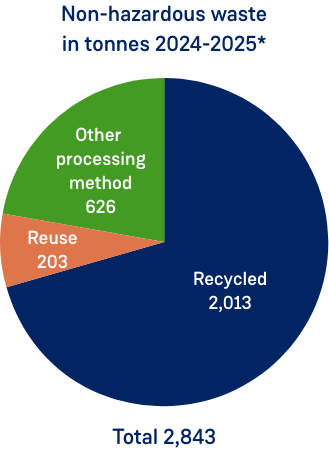
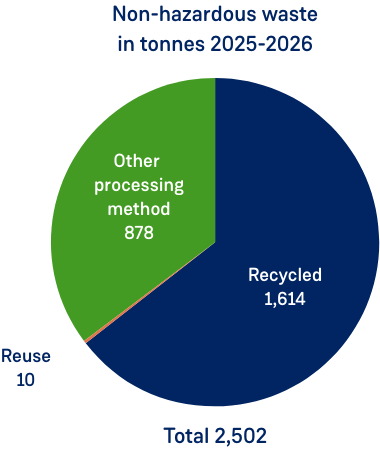
Our target for 2026 is to recycle 50% of our non-hazardous waste. In the 2025-2026 financial year, 65% of our non-hazardous waste was recycled and we also achieved a 10% reduction in total waste compared with 2024-2025.
The lower recycling rate compared with last year is related to a change in the classification of wooden pallets. At the beginning of 2025, Euro pallets were still included in the waste stream, but they have since been transferred to a deposit-return system. However, the underlying performance is positive, as more materials are given a second life and we are producing less waste overall. Our collaboration with waste broker Green Waste continues to play an important role in this. Green Waste supports us in further improving and making all our waste streams more sustainable.
CO₂ emissions
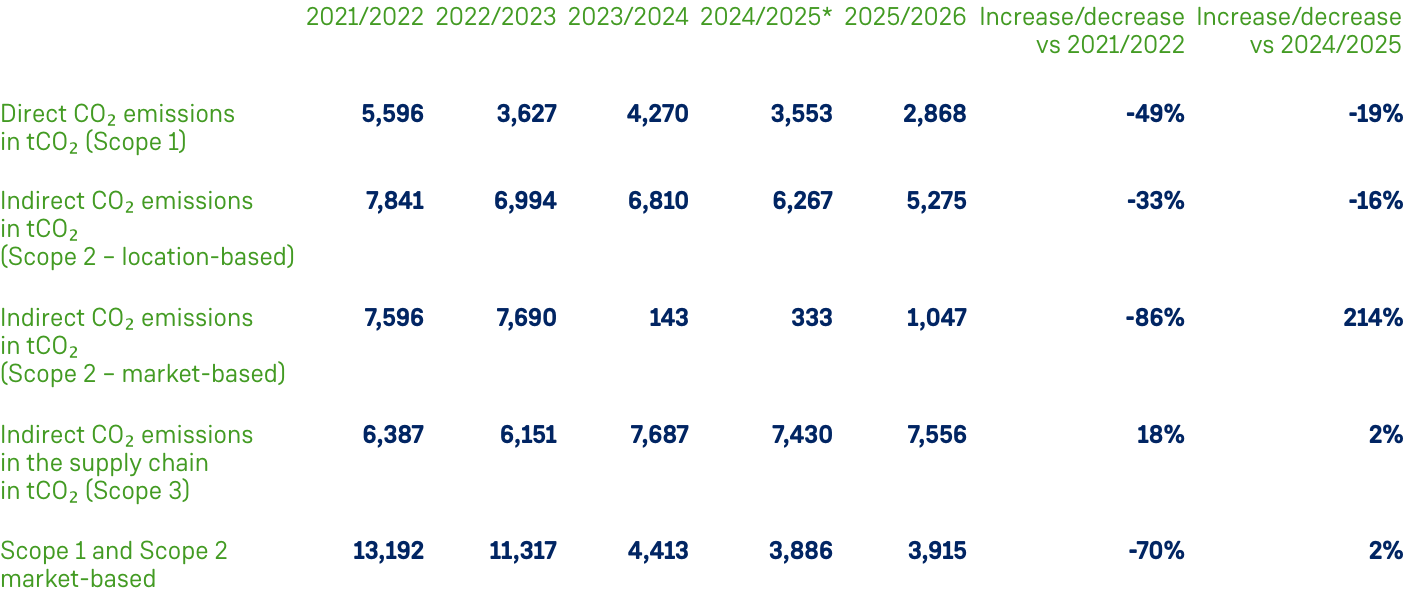
Our target is to be 30% CO₂-neutral by 2026. This is measured on the basis of our direct CO₂ emissions (Scope 1) and indirect CO₂ emissions (Scope 2, market-based) combined, compared with the 2021-2022 baseline.
This shows that we have now achieved a CO₂ reduction of approximately 70% through our own initiatives. We recognise that the data from the baseline period is less reliable in terms of quality. Nevertheless, we consider this strong progress to be a realistic reflection of our performance, given the concrete measures Brocacef has implemented in recent years.
Indirect CO₂ emissions (Scope 2) are measured in two ways: location-based and market-based. The location-based method is based on the average emissions from the electricity grid in the region. The market-based method takes into account the specific electricity contracts and energy sources.
In the 2023-2024 financial year, our green wind energy contract resulted in significantly lower emissions according to the market-based method. In 2025-2026, however, a considerable increase can be seen.
This is due to a correction made to the CO₂ calculations for our buildings. Not all locations – particularly rented premises – actually use the green electricity supplied under the wind energy contract. Previously, these locations were incorrectly included. This has now been corrected, resulting in a more realistic representation of the reported emissions.
The location-based method does not take our wind energy contract into account, but instead uses the average energy mix in the regions where our locations are based. This shows that we were able to reduce our CO₂ emissions by 16% compared with the previous financial year, thanks to lower energy consumption.
Fuel consumption
In the 2025-2026 financial year, Brocacef Group once again made part of its vehicle fleet more sustainable. Petrol and diesel vehicles were replaced with electric alternatives, reducing fossil fuel consumption and further increasing the share of electricity used for our own transport compared with the previous financial year.
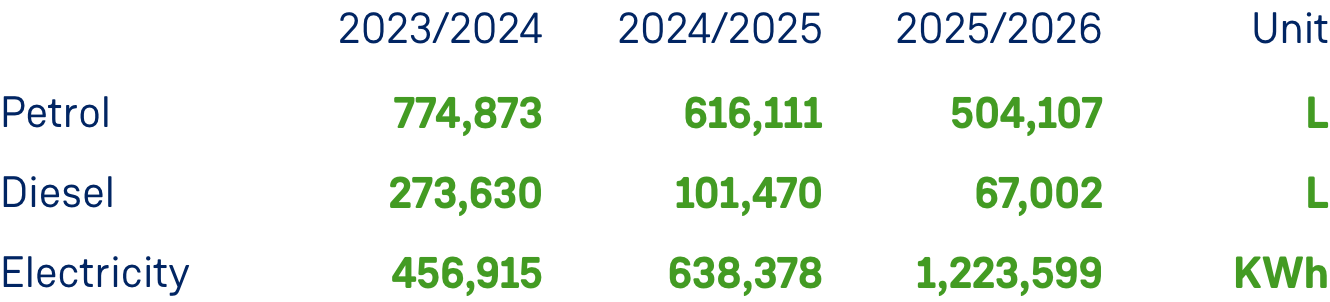
Electricity and gas consumption
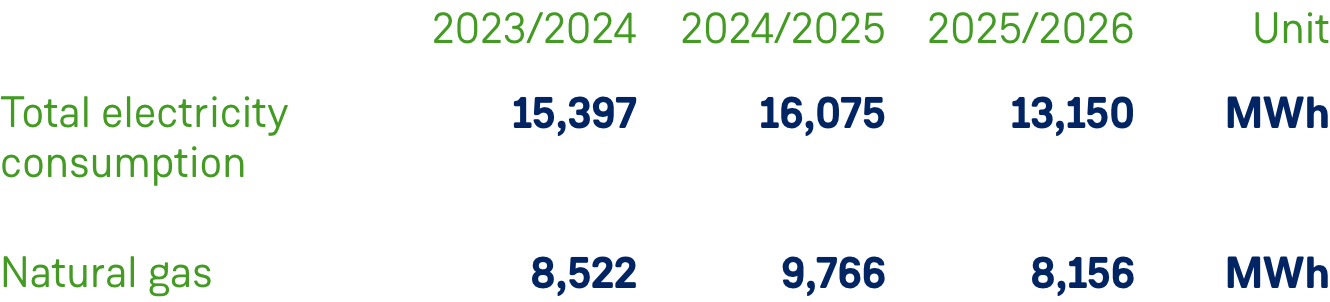
In the 2025-2026 financial year, Brocacef Group used 18% less electricity and 17% less natural gas than in the previous financial year. The commissioning of the solar panels in Amsterdam in January 2025 was one of the factors contributing to this lower electricity consumption.
Fluctuations in electricity and natural gas consumption are more difficult to explain, as weather conditions (such as colder or milder winters) and factors including building occupancy, business activities and the operation of installations all play an important role.
Scope 3 developments: CO₂ emissions and supply chain responsibility
In addition to our own energy consumption, we also look at emissions throughout our supply chain (Scope 3), such as third-party transport, purchased goods and business travel. In the 2025-2026 financial year, our Scope 3 CO₂ emissions increased by 2% compared with the previous financial year.
A 19% reduction was achieved in other energy-related activities (mainly purchased goods). Emissions from upstream transport and distribution also decreased slightly (-2%). In contrast, emissions from business travel increased significantly (+77%), mainly due to an increase in air travel. In relation to our total CO₂ emissions, this still represents a relatively small contribution, but it is nevertheless an important area of attention.
We aim to achieve further reductions by critically assessing the need for air travel and, wherever possible, encouraging alternatives such as train travel or digital meetings.
From this financial year onwards, emissions from waste are also included in Scope 3, based on the disposal method used. Recycled waste is considered climate-neutral in the CO₂ calculations, underlining the importance of further optimising our waste separation and recycling.
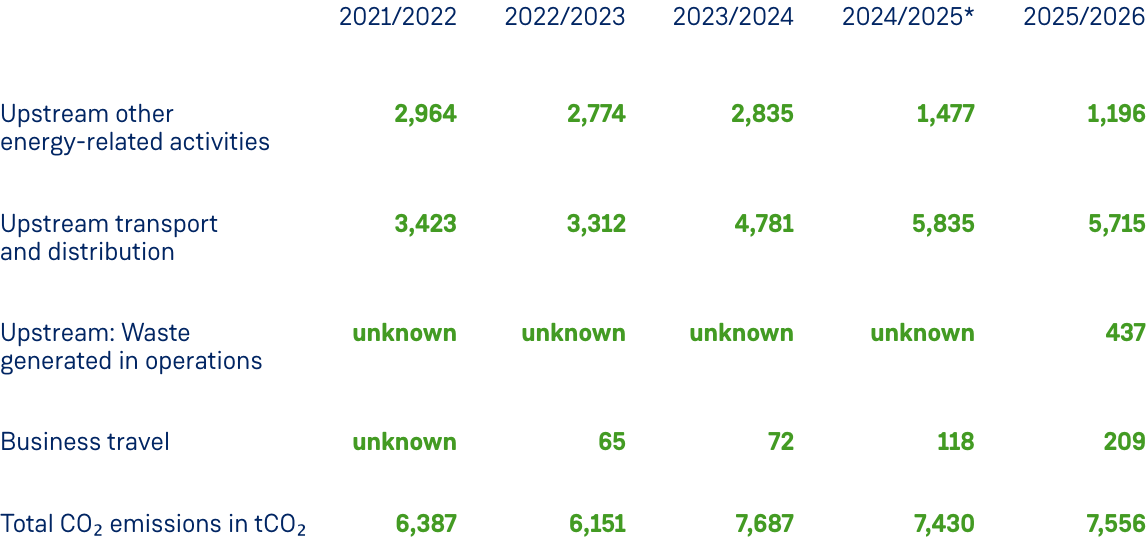
* Within the environmental theme, we updated our calculation tool and recalculated the emissions data for 2024-2025. As a result, the reported figures differ from those presented in the 2024-2025 sustainability report, but provide a more accurate picture of our actual emissions.